When a Dream Getaway Becomes a Financial Trap: The Hidden Cost of Second Home Ownership
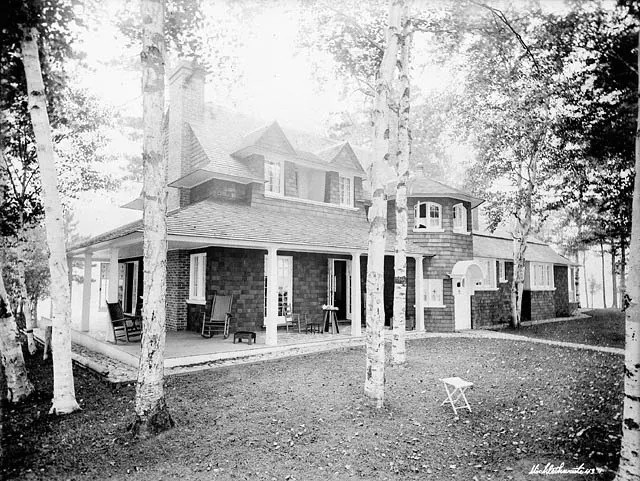
Photo: F. W. Micklethwaite, Public domain, via Wikimedia Commons
There is a particular kind of optimism that accompanies the purchase of a second home. The imagery is compelling: a coastal cottage, a ski chalet, a cabin tucked into the Blue Ridge foothills. For millions of American households earning between $80,000 and $200,000 annually, acquiring a vacation property has become a defining aspiration — a symbol of having arrived at a certain level of financial stability.
The trouble is that aspiration and financial prudence do not always occupy the same address.
Over the past decade, second home purchases surged dramatically, particularly during the pandemic-era migration away from urban centers. According to the National Association of Realtors, vacation home sales spiked by more than 16 percent in 2020 and 2021 alone. Many of those buyers are now discovering that what felt like a sound investment at low interest rates has become a considerable burden at current borrowing costs — and a quiet threat to their long-term financial health.
The Carrying Cost Problem Nobody Talks About
The most common miscalculation prospective second-home buyers make is treating the purchase price as the primary financial commitment. In reality, the ongoing carrying costs of a vacation property frequently amount to 3 to 5 percent of the home's value each year — a figure that compounds relentlessly regardless of how often the property is used.
Consider a representative scenario: a family in suburban Ohio purchases a lake house in northern Michigan for $380,000. Their mortgage, at current rates, runs approximately $2,200 per month. Add property taxes averaging $4,500 annually in many resort-adjacent Michigan counties, homeowners insurance (which tends to run higher for seasonal and waterfront properties), routine maintenance, utilities kept running to prevent freeze damage, and the occasional capital repair — a new roof, a failing septic system, a dock replacement — and the annual cost of ownership can easily reach $40,000 to $50,000 per year.
That figure, invested instead in a diversified retirement portfolio over 20 years, could conservatively generate $1.5 million or more, depending on market performance and contribution consistency.
The Tax Picture Is More Complicated Than Advertised
Many second-home buyers anticipate meaningful tax advantages. The reality is considerably more nuanced. Mortgage interest on a second home remains deductible only for taxpayers who itemize — a group that shrank substantially following the 2017 Tax Cuts and Jobs Act, which nearly doubled the standard deduction. For a large share of middle-income households, the deduction provides little to no practical benefit.
Renting the property to offset costs introduces an entirely separate layer of complexity. Under IRS rules, a property rented for fewer than 15 days per year allows owners to exclude that rental income from taxable income, but also forecloses most expense deductions. Rent it more frequently, however, and the home transitions toward investment property status, triggering depreciation recapture rules, passive activity loss limitations, and self-employment tax obligations if managed actively. Many owners who assumed rental income would subsidize their carrying costs find themselves navigating an unexpectedly complicated tax situation — often at the cost of professional accounting fees they had not budgeted for.
How Vacation Properties Affect Retirement Readiness
The retirement mathematics of second home ownership deserve serious scrutiny. Financial planners frequently observe what might be called equity concentration risk: a household with $600,000 in home equity spread across a primary residence and a vacation property, but only $180,000 in liquid retirement savings, is not as financially secure as their net worth figure suggests.
Real estate equity is illiquid. It cannot be drawn upon during a market downturn without a sale or borrowing event. It does not generate dividend income. And vacation properties, by their nature, tend to sit in markets that are more volatile than primary residential markets — resort towns, coastal communities, and ski destinations are disproportionately affected by economic downturns, natural disasters, and shifting travel preferences.
A couple who purchased a beachfront property in the Florida Panhandle in 2006 and needed to sell in 2010 experienced this reality acutely. Property values in many Gulf Coast resort markets declined 40 to 60 percent during the financial crisis — losses that took the better part of a decade to recover.
The Opportunity Cost Framework
The most useful analytical tool for evaluating a second home purchase is not the projected appreciation rate. It is opportunity cost: what else could those dollars accomplish?
For households that have not yet maximized contributions to tax-advantaged retirement accounts — 401(k)s, IRAs, Health Savings Accounts — the answer is frequently that the money would work harder elsewhere. The tax-deferred compounding available through retirement accounts is a structural advantage that real estate simply cannot replicate, particularly for properties that generate no income.
For households that have largely addressed retirement savings and are seeking diversification, a vacation property may be appropriate — provided the carrying costs are genuinely affordable without financial strain and the purchase does not require liquidating other investments or reducing retirement contributions.
When a Second Home Does Make Sense
This analysis is not intended to suggest that vacation property ownership is universally inadvisable. For certain buyers, under specific conditions, a second home can be a reasonable component of a broader financial plan.
The strongest candidates tend to share several characteristics. They have substantial liquid retirement savings — typically exceeding $500,000 — before making the purchase. They intend to use the property heavily, reducing the per-use cost. They purchase in markets with demonstrated long-term demand rather than speculative appreciation potential. And they approach the property as a lifestyle expenditure rather than a financial instrument, freeing themselves from the cognitive dissonance of expecting an emotional purchase to perform like an investment.
For those who want the experience of a vacation retreat without the financial exposure, alternatives merit serious consideration. Fractional ownership arrangements, destination clubs, and structured vacation rental programs allow households to enjoy resort-quality properties at a fraction of the carrying cost, while preserving capital for retirement and other financial priorities.
A Question Worth Asking Before You Sign
At House & Howell, we believe that every real estate decision should begin with clarity about what a property is actually meant to accomplish. A vacation home purchased primarily for personal enjoyment is a lifestyle choice, and there is nothing wrong with making it — provided you enter with clear eyes about the financial trade-offs.
A vacation home purchased with the expectation that it will build wealth, generate reliable income, or anchor a retirement strategy requires considerably more scrutiny. The numbers, in many cases, tell a story that the brochures do not.
Before signing a purchase agreement on that mountain cabin or coastal retreat, ask yourself a direct question: if this property appreciates at zero percent over the next 20 years and costs me $45,000 annually to hold, am I still comfortable with this decision? If the answer is yes, proceed with confidence. If it gives you pause, the pause is worth heeding.