Leverage in the Report: Turning an Inspection Into Your Strongest Negotiating Position
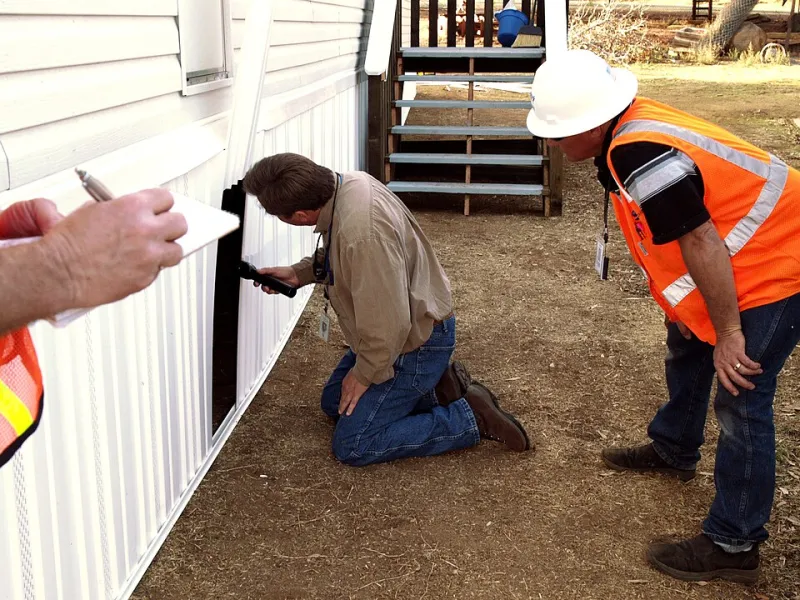
Photo: Amanda Bicknell, Public domain, via Wikimedia Commons
For many American buyers, the home inspection feels like a toll on the road to closing — a few hundred dollars paid to a professional who confirms what everyone already suspects. That framing costs buyers money. Handled correctly, an inspection is the most credible negotiating instrument you will possess during the entire transaction, because unlike an opinion or a hunch, it arrives in writing, backed by a licensed professional, usually within your contractual option period.
The buyers who understand this routinely recover thousands of dollars — or avoid a catastrophic purchase entirely. Here is how to join them.
Why the Inspection Is Leverage, Not a Checklist
A signed purchase agreement is not a promise to buy a house at any cost. In nearly every US state, buyers negotiate an inspection contingency — often called a due diligence period — that allows them to request repairs, negotiate credits, or exit the deal based on what the inspection reveals. Once the report lands, the seller knows something important: you now have documented evidence of every flaw, and every other future buyer will eventually learn the same thing if this deal collapses.
That asymmetry is your leverage. A seller facing a relisting knows the next offer will likely demand the same disclosures. A cracked foundation that appears in your report becomes a permanent fact about the property, whether you close or not.
Start Before the Inspection: Hiring the Right Inspector
Leverage begins with the quality of the evidence. Not all inspectors are equal, and the cheapest option often produces the thinnest report.
- Verify credentials and insurance. Look for membership in ASHI (American Society of Home Inspectors) or InterNACHI, plus errors-and-omissions coverage. In states that license inspectors, confirm the license is current.
- Ask about sample reports. A strong report includes photographs, severity ratings, and plain-language explanations — not a two-page checklist.
- Attend the inspection. An inspector who walks you through findings verbally provides context no report can: which stains are cosmetic and which signal an active leak.
- Consider specialists. If the general inspection raises a flag, a structural engineer, licensed electrician, or sewer scope technician can turn a vague concern into a precise, quotable defect. A $150 sewer scope that reveals a collapsed lateral line is the best-spent money in the entire purchase.
Be aware that in some states, inspectors are prohibited from quoting repair costs. That doesn't diminish the report — it simply means the estimate work falls to you.
Reading the Report With a Critical Eye
A typical inspection on an older American home can list 40, 60, even 100 items. Panic is the wrong response; triage is the right one. Every finding falls somewhere on a spectrum:
- Safety hazards and structural issues — faulty wiring, compromised framing, foundation movement, active water intrusion. These are the heavyweights.
- Major system failures — a furnace at end of life, a roof with three years remaining, a water heater past its service life.
- Maintenance items — a caulking bead that needs replacing, a slow drain, a sticking door.
Sellers and their agents will reframe category-one items as category-three items if you let them. Conversely, buyers who demand credits for every loose handrail lose credibility and stall negotiations. The reports that move sellers are short, precise, and anchored to safety and function — not aesthetics.
Negotiating: Credits Versus Repairs
Once you've identified legitimate findings, you face a choice: ask the seller to repair, or ask for money.
Repairs make sense when quality is verifiable — but you inherit the seller's choice of contractor, often the cheapest available, with no warranty and no time to verify the work before closing.
Credits put you in control. You take the money at closing, hire your own licensed contractor, and supervise the outcome. In most negotiations, experienced buyer's agents push for credits for exactly this reason.
Consider the arithmetic. Suppose the inspection reveals an aging roof with active flashing leaks. A contractor quote comes in at $9,400 for replacement. You can request a $9,400 credit and select your own roofer — or accept the seller's handyman's $2,200 "patch," which may fail within two winters. The credit preserves both your money and your standards.
Realistic anchor points from typical US negotiations:
- HVAC replacement: $7,000–$12,000, depending on region and system size
- Panel upgrade to 200 amps: $2,000–$4,000
- Sewer line replacement: $5,000–$15,000
- Foundation piering: frequently $10,000 and up
Present these as contractor estimates, not internet averages. A written quote on a contractor's letterhead transforms a negotiation from opinion into arithmetic.
Knowing When to Walk
Not every defect deserves a discount. Some deserve a goodbye.
Walk-away territory generally includes unpermitted structural modifications, evidence of chronic water intrusion or mold remediation done on the cheap, foundation movement that an engineer calls active, and any situation where the seller refuses access for follow-up inspections. Access matters: a seller who resists a specialist's visit is telling you something the report cannot.
Walking away stings, but it is the negotiation working as designed. You spent $500 on an inspection to avoid a $50,000 mistake. That is the best return on investment in residential real estate.
The Bottom Line
The inspection report is not the end of the buying process — it is the opening of a second negotiation, one conducted with facts instead of feelings. Hire carefully, read ruthlessly, price every legitimate defect with real estimates, and demand credits where you can control the outcome. The house that tested you can still be your home. It should simply cost what it's actually worth.